Blog
As AI removes development speed as a constraint, the core question in software delivery is shifting. Instead of asking how long something will take, organizations will ask how much it costs. What happens when execution is no longer time-bound but budget-bound?
Clears AI Team
6 min

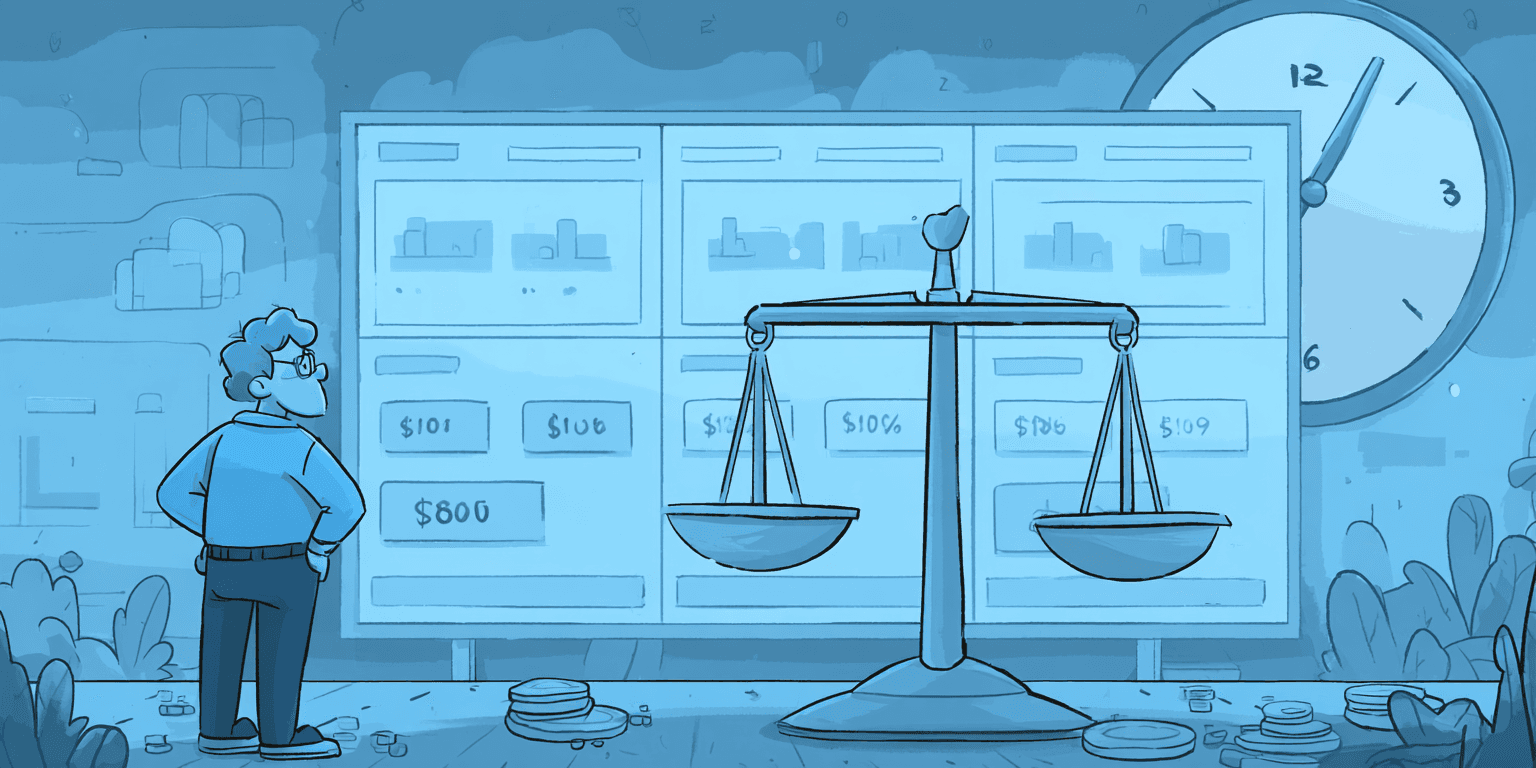
Imagine being able to ship thousands of tasks by tomorrow morning, burn down the backlog, release features that have been waiting for months, and even tackle long-overdue refactors.
The code gets written and everything reaches production, but there’s only one catch, the token cost would be enormous.
When Time Stops Being the Constraint
For decades, the central question in product development was simple: how long will this take? Every roadmap, every sprint, and every prioritization decision was built around the constraint of engineering capacity.
But that constraint is starting to break. As AI systems become capable of generating and executing work at scale, the limit is no longer how much can be built, but how much you’re willing to pay to build it.
The End of Queue Management
In the old model, product managers were effectively queue managers, balancing incoming requests against limited development capacity and deciding what makes it into the next sprint and what gets delayed by months.
Trade-offs were driven by time scarcity, because there was never enough capacity to do everything.
A New Constraint Emerges
In the emerging model, that constraint shifts. Execution capacity expands dramatically, and in some cases it becomes effectively unlimited.
But something else takes its place: budget. Every feature now has a direct, measurable execution cost, not in developer hours, but in tokens, compute, and infrastructure.
This changes the nature of prioritization.
From Roadmaps to Investment Portfolios
When time is no longer the primary constraint, prioritization becomes a financial decision. Instead of asking how long will this take, the question becomes how much will this cost and what is the expected business return.
Each feature turns into an investment decision, where the question is whether to spend tokens here or allocate that budget elsewhere, marking a shift from roadmap management to capital allocation.
The Rise of ROI-Driven Execution
In this new reality, organizations will need to:
Estimate the execution cost of features before building them
Evaluate expected business impact with greater precision
Continuously optimize where budget is deployed
Track the real return on execution, not just delivery velocity
This requires a level of visibility and control that most R&D organizations don’t have today.
Because historically, they didn’t need it.
When Everything Is Possible, Discipline Matters More
Paradoxically, when execution becomes easy, decision-making becomes harder. If you can build almost anything, almost instantly, the risk is no longer delay, but waste.
Shipping low-impact features becomes the new bottleneck, not because they take too long, but because they consume valuable budget.
Redefining the Role of Product and R&D Leaders
This shift has deep implications. Product managers are no longer just defining what to build, they are managing where to invest.
R&D leaders are no longer optimizing for throughput alone, they are optimizing for return on execution. Success is no longer measured by how much you ship, but by how much value you create per unit of cost.
Instead of asking how fast your team can deliver, start asking how efficiently your organization invests in execution.
That is the shift.